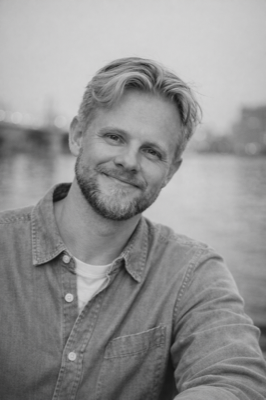
Founder letter
Welcome to Orbit
I created Orbit because I was tired of watching my most meaningful relationships slip through the cracks.
For too long, vampiric social media companies took our social skills and handled them for us: birthdays, group chats, event invites, all while monetising our every interaction. We let them stand in for community, and they trained us to broadcast instead of connect. Then they abandoned us, leaving entire generations unsure how to hold their relationships together without a feed to scroll.
That's not just a digital problem. It's a deeply human one.
Dunbar's social circles
The research of British anthropologist Robin Dunbar suggests we manage our relationships in concentric circles: at the core, just a handful of our closest loved ones; then a ring of fifteen good friends; fifty friends; and so on, up to about 150 meaningful contacts, the size of a human village.
Beyond that, relationships fade. Even with social media's promise of thousands of "friends," our social brains remain beautifully human, bound by time, trust, and emotional bandwidth.
The moment it clicked
Then, on a long interstate drive with my kids asleep in the back seat, I listened to The Power of Moments by Chip and Dan Heath.
They told the story of Eugene O'Kelly, the former CEO of KPMG US, who was diagnosed with terminal brain cancer and given just months to live. He wrote about that experience in Chasing Daylight. Instead of withdrawing, he instinctively drew a series of concentric circles of people: from his life partner, to his children and family, to his lifetime friends, and finally to business associates and connections who had touched his life.
He spent his final days creating Perfect Moments with each group, moving from the innermost circle outward. Not a bucket list, but simple, beautiful time spent together, fully present. He found more life in those last months than in many years of his career.
Even in the digital age, it's human circles, not feeds, that sustain us.
Orbit is my response
Orbit is my response. A space where you can see your people in circles, not in endless lists. A place to reflect, reconnect, and nurture the bonds that make us human. A place to build your own Perfect Moments.
Orbit is also about ownership. Your data is yours, your relationships and connections are yours. It's built on your contacts, and you can feed it back into your own apps or export it anywhere. You can even keep the whole system local and readable on your own computer or device.
Let's rebuild the circles and skills that sustain us. Welcome to Orbit.
A note on what makes Orbit possible
Orbit is self-funded and founder-built. It is not a venture-backed social app, and it is not funded or owned by Ludo Leisure Suite.
Ludo is another business I run: payment and operations software for big venues. Agricultural shows. Festivals. Stadiums. Attractions. It gives Orbit backend support for narrow shared edges, like optional RSVP pages and public previews, but it is not where your relationship memory lives.
The contrast matters. Where Ludo runs loud, public infrastructure for crowds, Orbit is quiet, private, and built for one person at a time. The thread between them is that I have spent more than a decade making heavy software feel calm to use.
Orbit is also my way of staying honest about that work. If Ludo can build payment systems that handle millions of taps under peak load without breaking, I can build a calm relationship companion that does not lose your notes, sell your friends to anyone, or insist you open it every day to keep a streak.
How I measure success
Most apps in 2026 measure success by daily active users, push-notification open rates, and time-in-app. Orbit measures success differently.
If ten people use this app, and each of those ten tells one friend, that is the entire growth plan.
No Series A coming. No exit plan. No growth team. Just a small, careful tool, built for the kinds of relationships that get better when nobody is performing for an audience. If Orbit ever sells something, it should be a chosen extra around the practice, not a paywall around memory itself.
If that is the kind of software you want to live with on your phone, I would love to have you in.
For more on why Orbit is built this way, see How Orbit stays free.